
What does modular laboratory furniture mean?
Core Definition
- Modular laboratory furniture is a system built like “Lego bricks,” consisting of a series of standardized, compatible, individual components (modules). These modules can be flexibly combined, configured, and rearranged to meet diverse experimental needs, spatial layout, and future developments.
- This stands in stark contrast to traditional, fixed laboratory furniture, which is typically custom-made and installed once, making it difficult to modify.
Core Features of Modular Laboratory Furniture
1.Standardization and Interchangeability.
- All components (such as cabinets, frames, countertops, supports, etc.) follow unified design standards and configurations.
- This means that modules with different functions (such as reagent racks, sink cabinets, instrument benches) can be seamlessly connected, and parts can be interchanged with each other.
2.Flexibility and Reconfigurability.
This is its most central advantage. When research projects, team sizes, or workflows change, you can easily
- Move: Relocate a workbench from one position to another
- Add: Introduce new functional modules, such as adding a fume hood or storage unit
- Remove: Take out parts that are no longer needed
- Rearrange: Change the layout of the entire laboratory, from open spaces to individual compartments, or vice versa.
3.Scalability
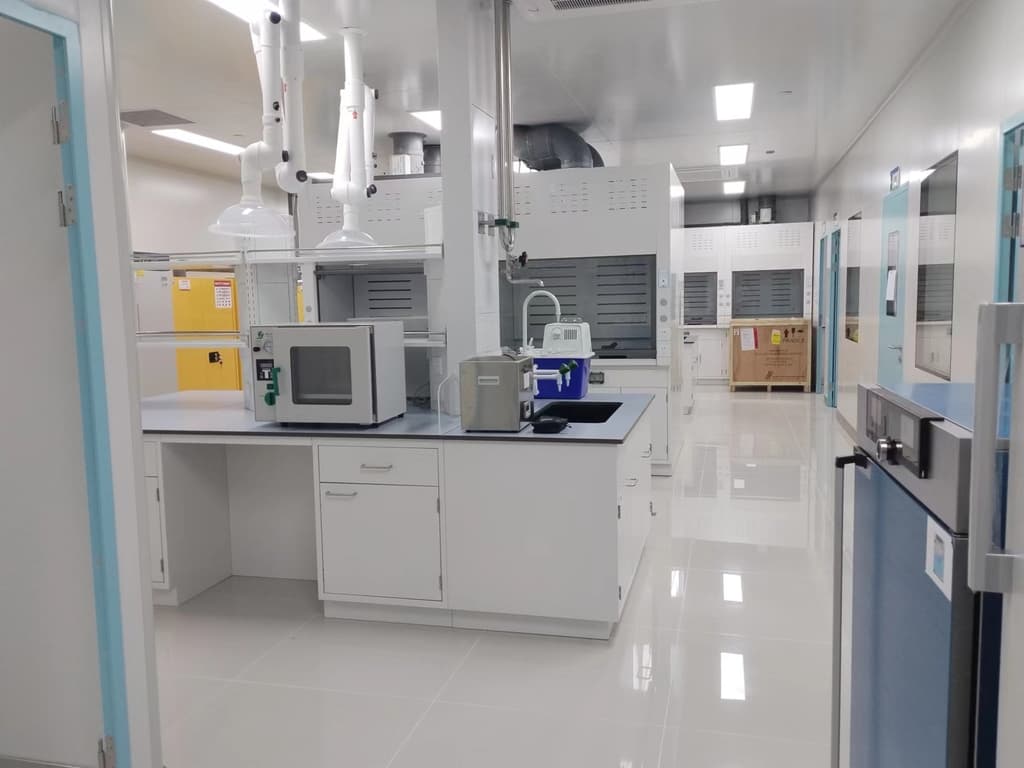
- Laboratories are constantly evolving, and modular design provides a perfect solution. When there is a need for expansion in the future, there is no need for major renovations; you only need to purchase modules of the same standard for assembly, there by protecting the initial investment.
4.System Integration
- The design of modular laboratory furniture typically considers the access points for utilities such as water, electricity, gas, and ventilation in advance. These pipelines can be distributed through pre-designed channels (such as vertical columns and horizontal cable trays), allowing utilities to be flexibly adjusted as the furniture moves, maintaining a clean and safe laboratory environment.